
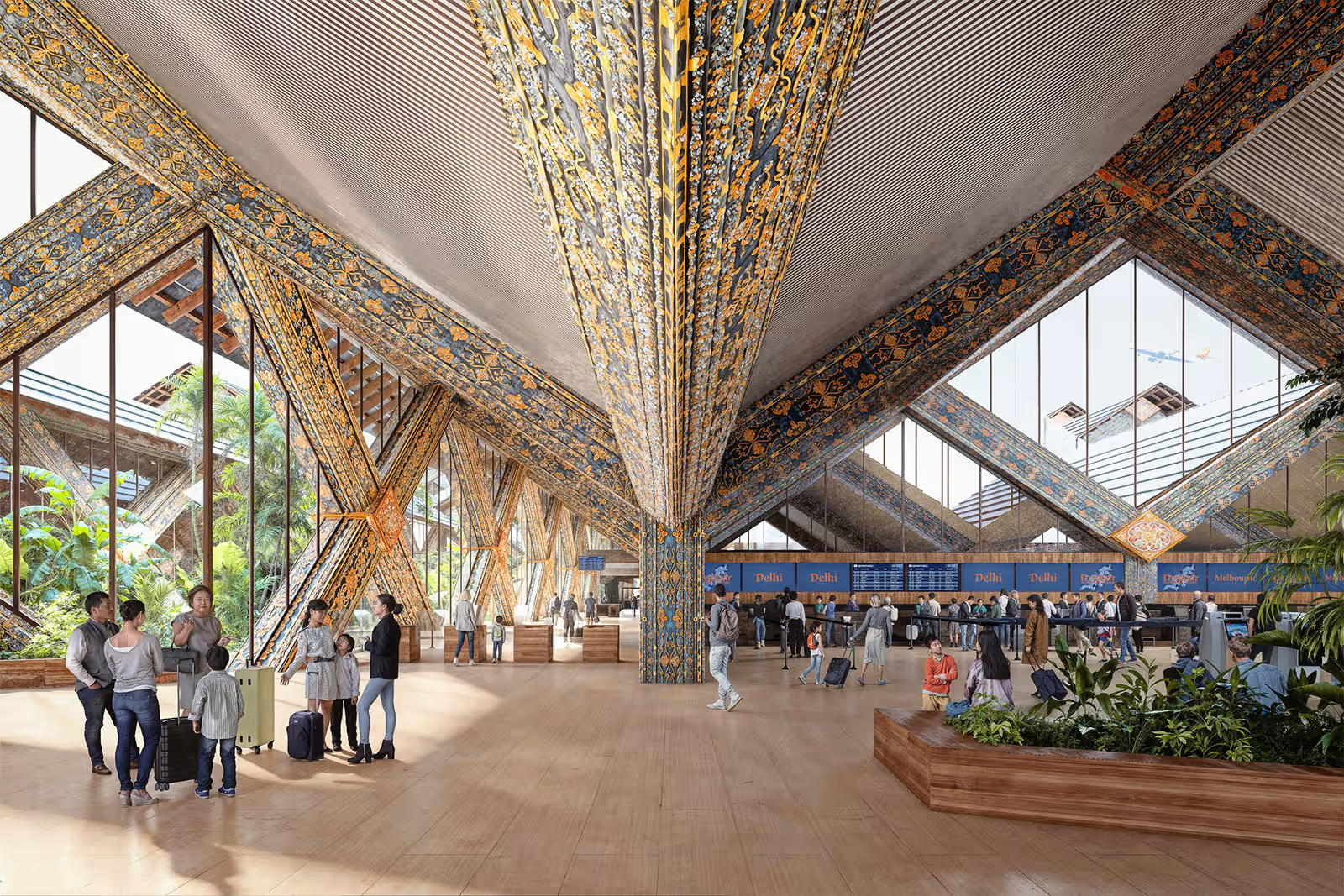
Set along Bhutan’s southern plains near the border with India, Gelephu is a town quietly transforming into one of the kingdom’s most ambitious gateways for the future. While it has long served as an important domestic aviation hub and commercial centre for southern Bhutan, Gelephu is now at the heart of a bold national vision: the creation of Gelephu Mindfulness City (GMC) and the development of a new international airport. Gelephu International Airport that will connect Bhutan more seamlessly with the world.
For travellers, Gelephu offers a striking contrast to Bhutan’s high mountain valleys. Here the landscape opens into lush subtropical forests, fertile plains and wide rivers flowing south into India.
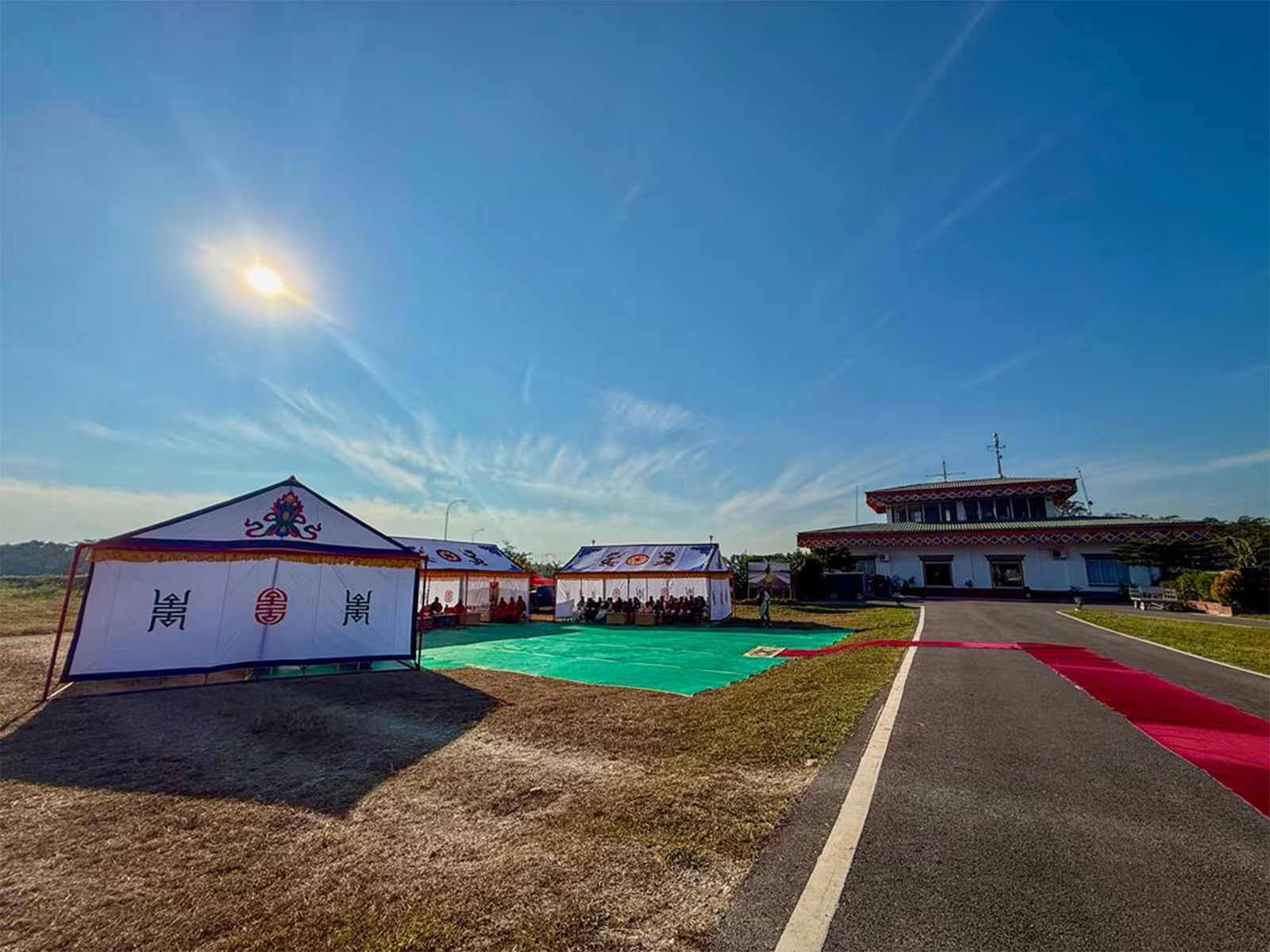
Gelephu Airport currently operates as one of Bhutan’s domestic airports, providing air connectivity between southern Bhutan and the country’s western and central regions.
Located in Sarpang District, the airport sits at a much lower elevation compared to Bhutan’s mountain airports. Its relatively flat terrain allows for smoother aircraft operations and easier expansion of aviation infrastructure.
Flights from Gelephu connect travellers to Paro, Bhutan’s primary international gateway. These domestic routes help shorten journeys across the country, especially for travellers exploring southern Bhutan or heading towards central regions such as Trongsa and Bumthang.
The airport is designed to serve turboprop aircraft used for domestic operations, with basic passenger facilities including check-in counters, a departure lounge and security screening.
Though modest in size today, Gelephu Airport plays an important role in Bhutan’s long-term aviation strategy.
Bhutan is currently developing a major international airport in Gelephu, which will dramatically expand the country’s aviation capacity in the coming years.
The new airport forms a key part of the Gelephu Mindfulness City (GMC) masterplan — an ambitious project envisioned as Bhutan’s next economic and innovation hub.
Unlike Paro Airport, which sits within a narrow Himalayan valley that limits aircraft size and flight frequency, Gelephu’s flat terrain offers ideal conditions for a larger international airport capable of accommodating wider aircraft and higher passenger volumes.
Once completed, the Gelephu International Airport is expected to:
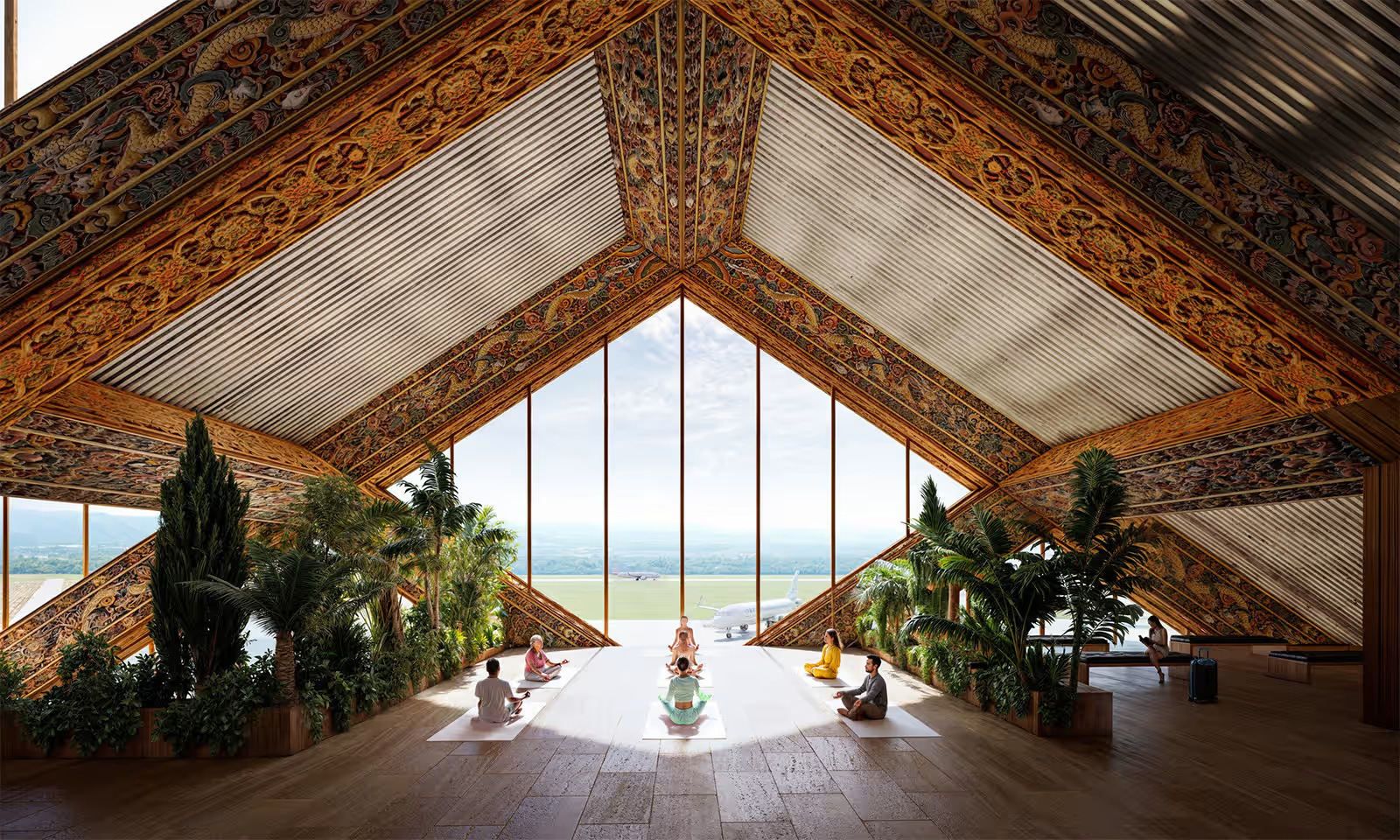
The airport is envisioned not simply as infrastructure, but as a carefully designed gateway that reflects Bhutan’s philosophy of mindful development and environmental balance.
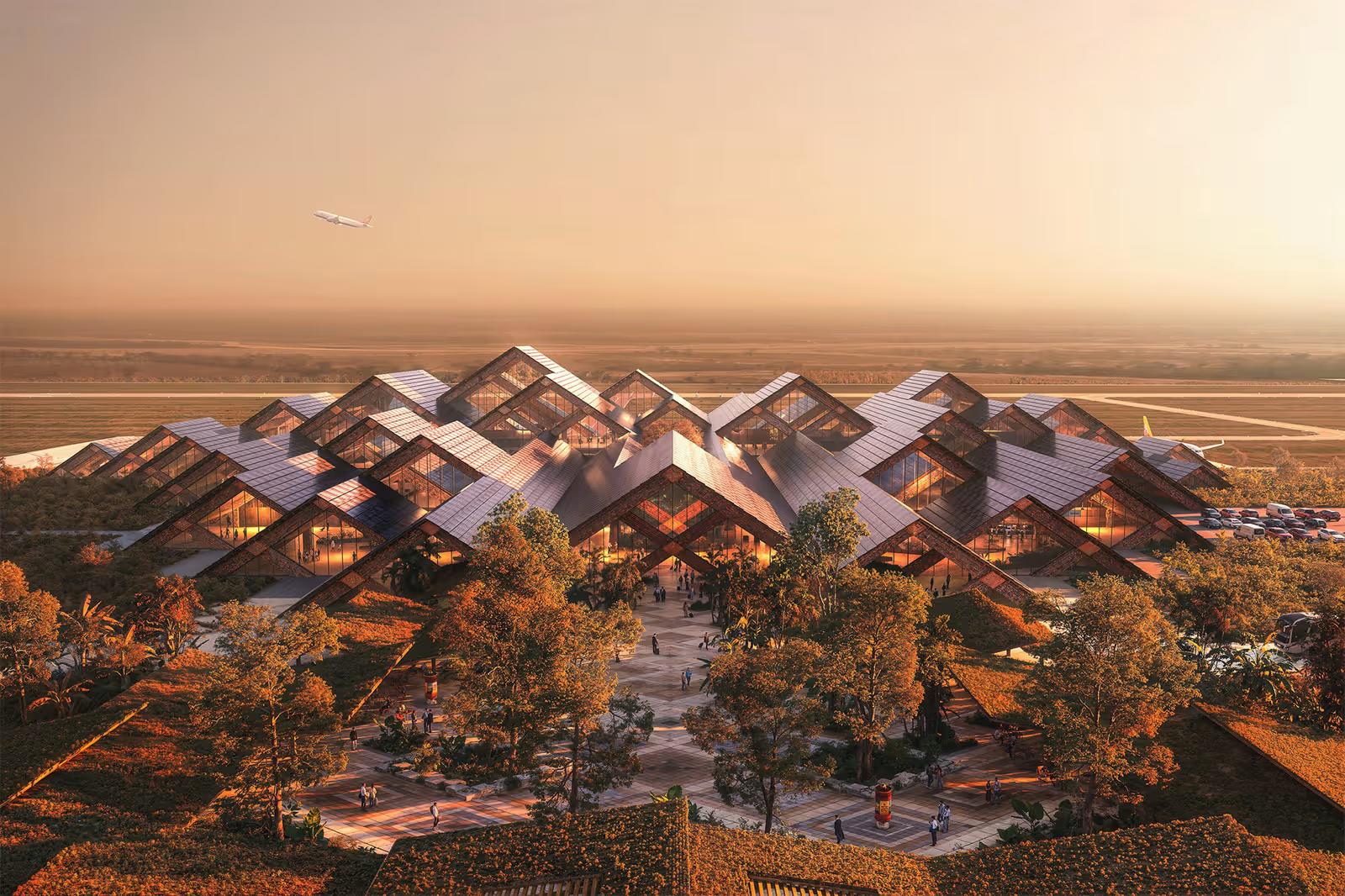
The masterplan for the new Gelephu International Airport has been designed by the internationally renowned architecture firm Bjarke Ingels Group (BIG) in collaboration with global aviation planners and Bhutanese partners.
The proposed design blends modern aviation infrastructure with Bhutanese cultural identity and environmental sensitivity. Inspired by Bhutan’s traditional architecture, natural landscapes and principles of mindfulness, the airport is envisioned as a calm and contemplative gateway rather than a conventional transit hub.
The architectural concept emphasises:
The visionary design has already attracted international recognition and industry accolades, highlighting Bhutan’s unique approach to building infrastructure that reflects both modern ambition and cultural authenticity.
Gelephu is also the future home of Gelephu Mindfulness City, one of Bhutan’s most visionary national initiatives.
Announced by His Majesty King Jigme Khesar Namgyel Wangchuck, GMC is planned as a special administrative region that blends economic innovation with Bhutan’s unique values of sustainability, wellbeing and Gross National Happiness.
Rather than following the model of conventional global financial centres, GMC is being designed as a mindfulness-driven city, where economic progress is balanced with environmental stewardship, cultural preservation and human wellbeing.
Key features envisioned for Gelephu Mindfulness City include:
The new international airport will serve as a major gateway to this emerging city.
Gelephu’s geography is markedly different from the mountainous landscapes many travellers associate with Bhutan.
Located in the subtropical foothills, the region enjoys warmer temperatures and fertile plains. Dense forests and protected wildlife corridors surround the area, forming part of Bhutan’s extensive conservation network.
Nearby national parks and wildlife reserves are home to remarkable biodiversity, including elephants, golden langurs, hornbills and countless bird species.
For travellers interested in nature, the southern belt of Bhutan offers a completely different ecological experience from the alpine valleys of the north.
Even before the development of GMC, Gelephu has long served as a commercial gateway between Bhutan and India.
Situated close to the border town of Gelephu–Assam crossing, it functions as an important trade corridor connecting Bhutan’s southern districts with regional markets.
Local markets, small businesses and agricultural trade have historically defined the town’s economy. With the upcoming development of GMC and the new international airport, Gelephu is expected to evolve into a dynamic economic centre while maintaining Bhutan’s careful approach to growth.
As Bhutan looks towards the future, Gelephu is poised to become one of the country’s most important gateways. The development of the Gelephu International Airport and the creation of Gelephu Mindfulness City represent a new chapter in Bhutan’s journey — one that blends innovation with the country’s timeless values.
For travellers, Gelephu offers a glimpse into Bhutan’s evolving story: a place where tradition, sustainability and forward-looking vision come together.
In the years ahead, this quiet southern town may well become one of the most significant entry points to the Land of the Thunder Dragon.
Are you dreaming of a journey that gently unravels the tapestry of Bhutan’s living heritage over ten soul-enriching days? Our 10‑Day Discover Bhutan Cultural Tour is a carefully...
Read moreThis luxury Bhutan itinerary is a preliminary draft, thoughtfully crafted to inspire your journey through the Land of the Thunder Dragon. However, every traveller is unique—and so...
Read moreHave you ever longed to step into a land where tradition reigns supreme, the air is steeped in prayer flags and ancient melodies, and every mountain pass feels like walking through...
Read more